
Project Concept Stage
Identifying climate actions and preparing project concepts based on Climate Resilient City Action Plan (CRCAP) and gap assessment
Bankability Stage
Implementation Stage
Supporting the procurement process by embedding climate considerations and providing technical inputs
Replication and Scaleup
What are Quick-win Projects?
Implementation projects that are fully funded by the CapaCITIES project. These projects are a test-bed for innovative approaches and technologies with a high potential of replication and scaling up through government programs and missions.
What are Co-Financing Projects?
Implementation projects that are partially funded through the CapaCITIES project and co-financed either through PPP or municipal budget. These projects can also be a test-bed for new approaches and technologies with a potential of replication and scaling up.
What are Bankable Projects?
Implementation projects with technical support from the CapaCITIES project. These can be both fully and partially bankable. Such Projects can be either financed through municipal resources or through private sector participation, development finance institutions, and commercial financing among others.
Quick-win Projects
Technical and Financial Support to Coimbatore for 154 kWp Floating Solar PV(FSPV) Plant at Periyakulam Lake
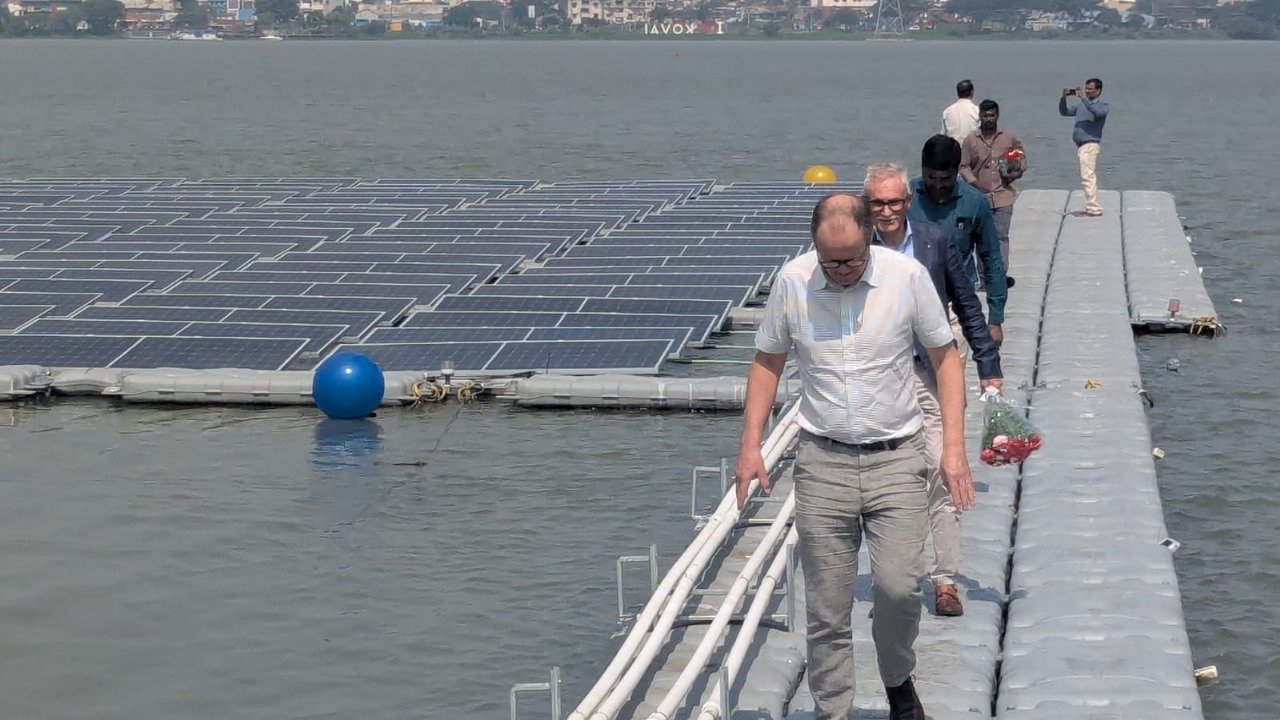
Coimbatore has been exploring innovative renewable energy solutions to enhance clean energy generation and utilise urban resources more effectively. As part of this effort, the city received technical and financial support under the project to implement an FSPV project on a lake within the city.
A potential assessment and technical feasibility study was conducted for various lakes in the city, and Periyakulam Lake was identified as a suitable site for an 18 MWp FSPV plant. A pilot project with a capacity of 154 kWp was implemented at Periyakulam Lake in Coimbatore at a cost of CHF 157,600. This was co-financed by the CapaCITIES project and the ‘Namakku Naame Thittam‘ scheme of the Government of Tamil Nadu. The project was commissioned and inaugurated in November 2025, following the approvals and grid connection provided by the Tamil Nadu Power Distribution Corporation Limited (TNPDCL).
Sector: Energy
Technical and Financial Support for Restoration of Chettikulam Lake in Tiruchirappalli
Tiruchirappalli has been undertaking lake restoration initiatives to strengthen urban water management and improve resilience to urban flooding during heavy rainfall. Technical and financial support was provided for the restoration of Chettikulam Lake in the city.
The CapaCITIES project co-funded CHF 96,115 for the restoration of Chettikulam Lake in Tiruchirappalli during 2024. The project contributes to improved stormwater management in surrounding areas. CapaCITIES provided technical support for bund strengthening and restoration of the upstream stormwater drain to enhance inflow to the lake. The recommended stormwater management structures have since been implemented by the city.
Sector: Water and wastewater Management
Technical and Financial support for implementation of Ahmedabad Opportunity Charging Station
Ahmedabad has been promoting sustainable urban mobility by adopting electric buses and supporting the development of charging infrastructure. To improve operational efficiency and reduce emissions from public transport, technical and financial support is provided to implement an innovative on-route charging solution for electric buses.
A solar-powered on-route (opportunity) charging station for electric buses was implemented as a co-financing project in Ahmedabad. The project includes a 240 kW charger (CCS II type with dual guns) along with a 120 kWp grid-connected solar PV system. The system improves operational efficiency by reducing non-revenue-generating travel distances, contributing to significant energy savings and GHG emissions reductions. Based on the positive outcomes, Ahmedabad Municipal Corporation has identified 4–5 additional locations to scale up similar charging infrastructure.
Sector: Mobility
Technical and Financial support to Siliguri for the implementation of 25 kW Rooftop Solar PV
Siliguri has been promoting renewable energy solutions to reduce emissions and improve energy resilience in municipal infrastructure. As part of this effort, support was provided for the installation of solar PV systems in a municipal building.
A 25 kWp solar PV system with battery backup was installed on a four-story municipal building as part of a co-financing project. The initiative is the first of its kind at this scale in the city and is expected to save approximately CHF 2,900 annually while mitigating 24.667 tCO₂e of GHG emissions. Siliguri Municipal Corporation plans to scale up similar installations across municipal buildings and has applied for funding support to prepare a feasibility DPR.
Sector: Energy
Technical and financial support for watershed assessment and development of a flood early warning system in Tirunelveli city
Tirunelveli experiences fluvial and urban flooding during heavy rainfall. Supported watershed assessment of flood vulnerable locations in the city and feasibility study to develop an early warning system for the Thamirabarani River, leading to implementation of the Flood Early Warning and Monitoring System (FEWMS).
The FEWMS was implemented in December 2024 at a cost of CHF 92,288 and integrated with the Disaster Management Cell at the Tirunelveli District Collectorate. The system enables monitoring of water discharge levels at key locations in the Thamirabarani basin. Initial testing during heavy rainfall indicated the need for sensor calibration and improvements to the hydrological model to enhance forecasting accuracy.
Sector: Water and Wastewater Management
Deployment of 18 Electric Rickshaws as a Pilot Initiative

Udaipur: CapaCITIES project assisted Udaipur city to implement a pilot initiative to evaluate the technical capacity and workability of e-rickshaws in the context of Udaipur with its peculiar terrain and user base.
The project deployed 18 e-rickshaws of different types, specification and technology and tested their performance on city roads and prepared a case study on the e-rickshaw operations for the city to scale-up the low carbon IPT system especially faster deployment of E-rickshaws.
Annual emission reduction from the pilot project includes 45.62 tCO2e of GHG emission, 261 kg of NOx and 132 kg of particulate matter.
Sector: Mobility
Deployed Area Based Groundwater Recharge Systems

Rajkot: The City lies in an arid zone and faces significant water stress during the summer months but during monsoon season its affected by flooding across several in the city.
Based on an assessment of potential groundwater augmentation and in consultation with Rajkot Municipal Corporation, CapaCITIES project installed groundwater recharge at five locations across the city. These recharge structures not only ensure safe groundwater recharge from rainfall runoff, but also addresses issues of urban flooding, resulting storm water drainage systems.
Sector: Water and Waste Water Management
Leak Detection Machines to Reduce Non Revenue Water (NRW)

Siliguri: CapaCITIES project provided two Acoustic Leak Detection Machines to the Siliguri Municipal Corporation, and trained a team of engineers to operate them.
As a pilot study, the machines were used to conduct a water audit in water zone 1 of the city. The machines helped in reducing the NRW by accurately pinpointing the leaks in the water pipeline network and in reduction of energy being lost due to pumping the NRW, thereby reducing greenhouse gas emissions from pumping water that eventually goes to waste.
Status: Completed in Phase 1
Sector: Water and Waste Water Management
Decentralized Solid Waste Management System at Selected Wards in Coimbatore

Coimbatore: CapaCITIES project team implemented the SUNYA – Zero Waste Wards initiative in ward no. 22 and 24 of Coimbatore which successfully achieved 100% household level source segregation of biodegradable waste.
In ward 22, a decentralized 1.5 tonnes per day (TPD) biomethanation plant was installed under the CapaCITIES project as a demonstration project on decentralized solid waste management that the city can replicate across the city. The biomethanation plant has the capacity to reduce 1500 tonnes of CO2e GHG emissions per annum.
Sector: Solid Waste Management
Decentralized Solid Waste Management System at Selected Wards in Siliguri

Siliguri: CapaCITIES project team implemented the SUNYA – Zero Waste Wards initiative in ward no. 2 and 17 of Siliguri which successfully achieved household level source segregation of biodegradable waste.
Approximately 7,500 households and commercial entities in the wards. The most efficient way to reduce GHG emissions from waste disposal is to reduce waste generation at the source, followed by appropriate processing and scientific disposal of rejected waste. A decentralized 1 TPD micro-composting centre was designed and installed under the project to process biodegradable waste from the two wards which can reduce around 2500 tCO2e of GHG emissions.
Sector: Solid Waste Management
Decentralized Solid Waste Management System at Selected Wards of Udaipur

Udaipur: CapaCITIES project team implemented the SUNYA – Zero Waste Wards initiative in ward no. 1 and 41 of Udaipur which successfully achieved household level source segregation of biodegradable waste.
Approximately 3500 households and commercial entities were initiated to waste segregation practices on a pilot scale. Based on a quantification and characterization study of waste from the two wards, a decentralized 2 TPD biomethanation plant was designed and installed to process the 2.65 tonnes of mixed waste generated daily from the two wards. The annual GHG emission mitigation potential of the is 1,437 tCO2e.
Status: Completed in Phase 1
Sector: Solid Waste Management
Renewable Energy Solar PV for Social Housing in Rajkot

Rajkot The Municipal Corporation had planned to construct 10000 affordable housing units by 2020. CapaCITIES project created a case for utilizing renewable energy for common utilities in all social housing projects.
This was done by deploying a pilot Solar PV system of 31.5 kWp in the Krantiveer Khudiram Bose Township. This created an annual savings of roughly 45,360 units of electricity, contributing to a GHG emission reduction potential of 37 tCO2e.
Sector: Energy
145kWp Solar PV System in Aji Water Treatment Plant

Rajkot: CapaCITIES project installed 145 kWp solar PV systems to power one of the five water treatment plants under the Rajkot Municipal Corporation as a demonstration project to utilize roof space available with the municipal corporation infrastructure facilities.
This system contributed to over 50% of the allowed PV capacity at the plant and saved 211,700 kWh per year (~18% of existing electricity consumption was fulfilled by solar installation), contributing to a GHG emission reduction of about 174 tCO2e.
Sector: Energy
Installation of Ambient Air Quality Monitoring Stations (AAQMS)

Coimbatore: Four Ambient Air Quality Monitoring Stations and a digital display board that would continuously report data from all the 4 sensors were installed at the Town hall of Coimbatore City Municipal Corporation.
The 4 stations located at CCMC Town Hall, East Zone office, West Zone office and Master Service Reservoir Office on Sathy Road, have been providing critical information for transport planning, assessing health impacts, building awareness and for urban planning.
Status: Completed in Phase 1
Sector: Air Pollution Monitoring
Installation of Ambient Air Quality Monitoring Stations (AAQMS)

Rajkot: The project helped the city in installing 2 AAQMS stations at Trikon Baug and RMC East Zone Office that can also monitor Particulate Matter (PM2.5, PM10) which is critical information for better mobility plan and effective traffic management.
Rajkot city had deployed 20 environmental sensors across the city for temperature, humidity and air quality with respect to GHG emissions, however, they lacked PM sensors.
Status: Completed in Phase 1
Sector: Air Pollution Monitoring
Installation of Ambient Air Quality Monitoring Stations (AAQMS)

Siliguri: CapaCITIES project helped the city in installing four sensor based AAQMS in Siliguri’s Municipal Corporation main administrative building, Primary Health Center (PHC) at ward 36, Bhakti Nagar Police Station, and Mallaguri Police Outpost.
The AAQMS have been serving as a monitoring infrastructure providing vital information for better transport and traffic planning in the City and its potential impacts on improving air quality in the city. The AAQMS have been serving as a monitoring infrastructure providing vital information for better transport and traffic planning in the City and its potential impacts on improving air quality in the city.
Sector: Air Pollution Monitoring
Installation of Ambient Air Quality Monitoring Stations (AAQMS)

Udaipur: Four locations in Udaipur were identified and 4 sensor based AAQMS were installed to improve the availability of air quality data from multiple locations and also for regular monitoring.
The city corporation staff were also trained on monitoring AAQMS and air quality data. The city initially only had one continuous ambient air quality monitoring station. The deployment of four additional sensor based AAQMS improved the availability of air quality data from multiple locations, which helped prepare relevant policies to improve air quality.
Sector: Air Pollution Monitoring
Bankable Projects
Technical support through developing training modules for solid waste
management for official staff, Vadodara
Vadodara has been strengthening capacity building efforts within the municipal workforce to improve the effectiveness of solid waste management operations and support climate action goals through developing training modules.
Training modules were developed in the local language and micro-training sessions were conducted for more than 680 sanitary workers, supervisors, and officials from the Solid Waste Management Department of Vadodara Municipal Corporation. The trainings focused on improving operational efficiency, worker safety, and alignment with Net-Zero CRCAP targets, with four zonal-level sessions conducted in November 2025
Status: Completed in Phase III
Sector:Solid Waste Management
Tiruchirappalli Conversion of the Knowledge cum Library Centre into a Green Building
The Tiruchirappalli City Corporation (TCC) has launched an innovative project to create two green Library-Cum-Knowledge Centres at Palakkarai and Kuduppallam. Supported technically by the CapaCITIES Phase II project, these centres set a new standard for sustainable public buildings in the city.
As part of the CapaCITIES Phase II project, a comprehensive technical review was conducted on the initial building plans, technical specifications, cost estimates, and other relevant tender documentation. This review aimed to Integrate Green Building Criteria, Assess Feasibility, Inform tender documentation
Status: Completed in Phase II
Sector:Built Environment and Energy
Udaipur Processing Organic Waste through Biomethanation
Udaipur City marked a significant milestone with the inauguration of its first biomethanation facility designed to process biodegradable waste generated within the city. The facility, with a capacity of 2 tonnes per day (TPD), has been developed under the CapaCITIES project, funded by the Swiss Agency for Development and Cooperation (SDC), with support from the Udaipur Municipal Corporation (UMC)
The biomethanation plant, located at the Madri Fire Station (Ward 31), processes about 2 tonnes of wet organic waste daily, primarily sourced from hotels. Through anaerobic digestion, the facility generates around 200 units of electricity and 250–300 kg of compost each day. The electricity produced is currently used for the fire station’s operations, including water pumping, lighting, and residential quarters. As the station consumes only about 50 units daily, plans are underway to supply the surplus power to the grid for use in Udaipur Municipal Corporation (UMC) sewerage pumping stations. The plant is estimated to reduce approximately 1,437.4 tCO₂e emissions (about 1.5% of Udaipur’s solid waste sector emissions) and also helps address waste-related health risks linked to rising temperatures and rainfall. Recognizing its benefits, UMC is planning to replicate this technology at the municipal level.
Status: Completed in Phase II
Sector:Solid Waste
Climate Budget for Ahmedabad Municipal Corporation FY 2025-26
Ahmedabad made a significant leap in climate governance by becoming the first city in India to include a dedicated “Sustainability and Climate Budget”; in its Municipal Budget Book for FY 2025–26. The city has allocated INR 59,180 million —representing 72% of its total capital budget—for climate and sustainability initiatives in 2025–26. ICLEI South Asia provided technical assistance to the Finance Department to help prepare the Climate Budget 2025-26.
AMC undertook an innovative effort to develop a Climate Budget for FY 2025–26, aiming to identify the climate relevance of their proposed projects and incorporate climate considerations into municipal budget planning. To support this process, ICLEI South Asia provided technical assistance to the Finance Department by updating project identification formats to include climate relevance and facilitating discussions with all departments on the concept and preparation of the climate budget.
Status: Completed in Phase III
Sector:Sustainable Finance
Climate Budget for Ahmedabad Municipal Corporation FY 2026-27
Continuing the legacy of preparing the Climate Budget, for 2026-27, the Ahmedabad Municipal Corporation allocated INR 98,680 million—representing 84% of its total capital budget—for climate and sustainability initiatives. ICLEI South Asia provided technical assistance, under CapaCITIES Phase III, to the Finance Department to help prepare the Climate Budget 2026-27.
AMC continued to advocate for the creation of a Climate Budget for FY 2026–27, focusing on assessing the climate impacts of its project proposals and integrating climate considerations into municipal financial planning. To aid this effort, ICLEI South Asia provided technical support to the Finance Department by identifying projects with climate relevance and by guiding discussions across departments on the climate budget's concept and development.
Status: Completed in Phase III
Sector:Sustainable Finance
E-Waste Management Initiated in Coimbatore

Coimbatore generates around 10 TPD of e-waste and the city’s efforts to better manage the informal e-waste was supported by CapaCITIES project through a bankability study on viable business models for e-waste management.
Study found that the city corporation should set up a dedicated facility for collection, dismantling, recycling and safe disposal of E-waste on a PPP basis and an advertisement for expression of interest was floated in this regard.
Status: Bankability Report Submitted in Phase 1
Sector: Solid Waste Management
Operations and Maintenance of Micro Compositing Centers on PPP
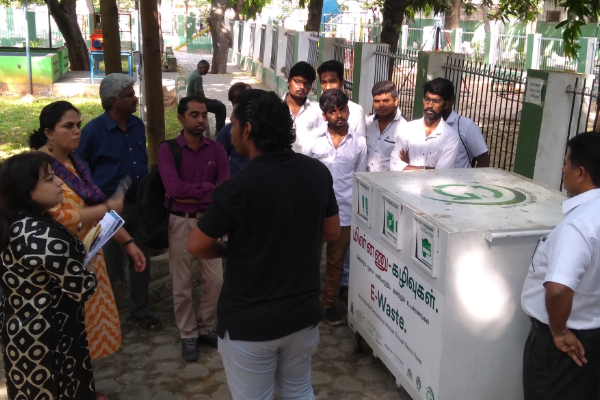
Coimbatore City Municipal Corporation (CCMC) was mandated by the National Green Tribunal (NGT) to construct Micro-composting centers (MCCs) in various wards of the city.
CapaCITIES project assessed the operational viability of 6 Micro-composting Centers (MCCs) based on PPP model for replication in other wards across the city. The bankability study found the model to be viable with several complementary benefits to the city.
Status: Bankability Report Submitted in Phase 1
Sector: Solid Waste Management
Feasibility Study to Set up 4MW Solar Power Project

Rajkot: Under the CapaCITIES project, a feasibility study was conducted to set up a new ground based solar power project of 4 MWp capacity at the existing Solid Waste Management facility in Nakarawadi.
The facility was found to have a shadow free available area of 24,345 sq mt and a connected load of 60 HP. An illustrative revenue model based on the feasibility study was developed to assess the bankability of the project which revealed that the project was prima-facie bankable to be tendered on Independent Power Producers basis.
Sector: Energy
Feasibility Study to Set up 23 MW Solar Power Project

Rajkot In order to utilize the ground and rooftop space available with the Rajkot Municipal Corporation for solar power projects, a feasibility study was conducted as part of the CapaCITIES project at Sewage (Anandpar, Madhapar) and Water Treatment Plants (Ribeda, Raiyadhar) of Rajkot.
The study found the facilities to have the potential for a combined capacity of ~23 MWp of ground and roof top mounted solar pv system. The facility was found to have a shadow free available area of 24,345 sq mt and a connected load of 60 HP. An illustrative revenue model based on the feasibility study was developed to assess the bankability of the project which revealed that the project was prima-facie bankable to be tendered on Independent Power Producers basis.
Status: Bankability Report Submitted in Phase 1
Sector: Energy
Development of a Captive Solar Power Plant

Rajkot: The average electricity consumption of Rajkot over the last three years is more than~60 million kwh. The project is supporting development of a 10MW solar plant for captive use of Rajkot Municipal Corporation.
By displacing conventional energy consumption of Rajkot city, the project is expected to reduce ~0.03 mio tco2e and result in significant cost savings for RMC.
Sector: Energy
Development of Walled City as a Green Mobility Zone (GMZ)

Udaipur: Walled city houses major economic and tourist destinations in Udaipur, due to large floating population congestion and air pollution has been identified as a key issue.
The project is supporting development of the walled city as a Green Mobility Zone- access controlled area with amenities to support and promote electric mobility. The project post implementation is expected to result in significant reduction in transport led GHG emission and also improve the tourism aesthetic value of the walled city.
Status: Phase 2 – Under Progress
Sector: Mobility
Development of 200 Tons Organic Waste to Bio CNG Plant on Public Private Partnership

Coimbatore: ~40% of the total waste generated by the Coimbatore city is dumped in a mixed waste landfill at Vellalore. The project is supporting development of 200 tons waste to Bio CNG facility to process the organic waste on PPP.
By reducing the organic waste dumped at the mixed landfill the project is expected to ~0.38 mil tco2e annually and mobilize ~ EUR 8-9 mil. private investment in the city.
Sector: Solid Waste Management